
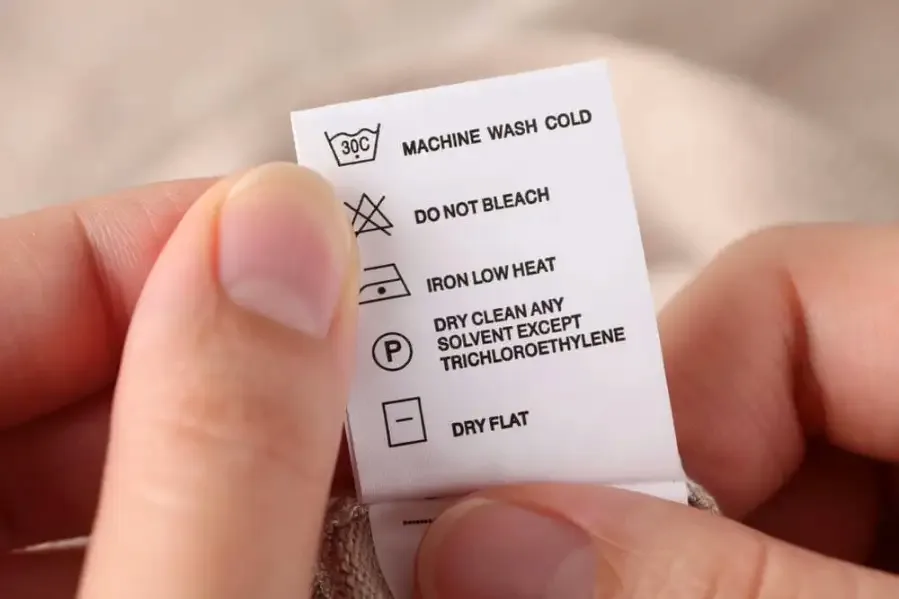
Most brand owners overcomplicate clothing label requirements. I have navigated customs holds and factory audits, so I know you strictly need four things to be legal in the US.
The Mandatory 4 (US Baseline):
- Fiber Content (e.g., 100% Cotton).
- Country of Origin.
- Identity (RN# or Company Name).
- Care Instructions (Must be permanently attached).
My Top Recommendations:
- Best Overall (Compliance-Ready): JaceApparel. I recommend this route for scaling brands. We integrate the mandatory fields directly into the Cut & Sew phase, eliminating compliance bottlenecks.
- Best for Low-MOQ: Wunderlabel. Perfect for runs under 50 units. The weaving is sharp, but you must sew them in yourself.
- Best for Traceability: TrusTrace + Avery Dennison. The essential data layer for EU Digital Product Passport readiness.
Disclaimer: This is operational guidance based on experience, not legal advice. Always verify with the FTC Threading Your Way guide.
Here is how to execute this without errors. How to Manufacture Clothing?
Buying Guide: Defining Legal & Manufacturing Specs
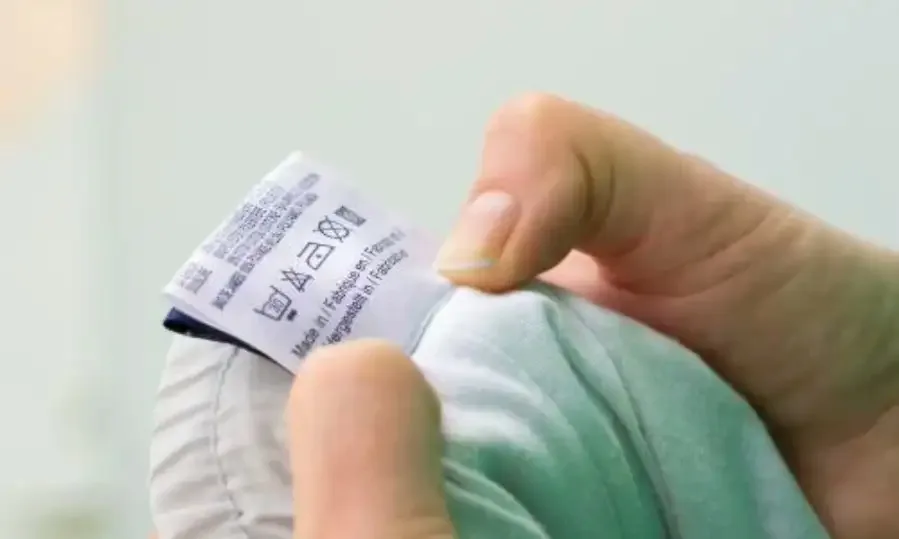
Labeling is not just branding; it is a legal compliance document. In our production runs with both domestic partners and Clothing Manufacturers China, we have seen shipments seized for simple errors, like printing “Bamboo” instead of the legally required “Rayon made from Bamboo,” which has been repeatedly targeted by the FTC and CBP.
We approach labeling with a “Compliance-First” mindset. Use this criteria matrix to vet your labeling strategy before approving a single proof.
1. The Geographic Filter: Where Will You Sell?
Define your territory immediately. US Customs and Border Protection (CBP) enforces different triggers than EU market surveillance.
- US Market: You must strictly follow FTC and CBP statutes.
- EU Market: You face stricter environmental substantiation rules and must use specific fiber translations (e.g., “Elastane” vs. “Spandex”).
- Online Sales: If selling to the EU, you must display fiber composition on the product page before the customer clicks “Buy.”
2. The US Baseline (FTC + Customs Reality)
Through years of importing, we identified four non-negotiable data points. If these are missing or incorrect, your shipment can be held at the port.
Fiber Content (Textile Act)
You must list fibers by their generic names in descending order by weight.
- The Standard: “60% Cotton, 40% Polyester.”
- The Pitfall: Never use trade names like “Lycra” without the generic name (Spandex) adjacent to it.
- Tolerance: Fibers under 5% must be listed as “Other Fiber” unless they provide a specific function (like elasticity).
- Verification: We require a Mill Test Report to verify the blend before printing.
Resource: FTC Threading Your Way Guide
Country of Origin
This is the most common reason for seizures.
- Criteria: The phrase “Made in [Country]” must be in English.
- Placement: For shirts, this must be visible at the center of the neck (inside).
- Substantial Transformation: If you cut fabric in China but sew it in Vietnam, list the country where the substantial assembly occurred.
Dealer Identity (RN Number)
You must identify the company responsible for the product.
- Execution: Use a Registered Identification Number (RN) to save space.
- Ops Note: Check the FTC RN Database to ensure your number is active.
- Private Labeling: If you use a private label clothing manufacturer, you may legally use their RN, but we recommend obtaining your own to build brand equity.
Care Instructions
The FTC Care Labeling Rule requires instructions to be permanently attached and legible for the useful life of the garment.
- Testing Mindset: Do not guess. Printing “Dry Clean Only” to avoid liability is illegal without evidence. You must have a “reasonable basis” (lab testing) for your instructions.
3. International Variances (UK & EU)
If you ship across the Atlantic, the label specs change.
- UK Safety: Nightwear requires flammability warnings under BS 5722. You must test to determine if the label reads “LOW FLAMMABILITY” or “KEEP AWAY FROM FIRE.”
- EU Animal Origin: If your hoodie has a leather pull tab, you must include the phrase: “Contains non-textile parts of animal origin.”
4. 2026–2027 Outlook: Digital Product Passport (DPP)
The industry is shifting toward transparency under the EU’s Ecodesign for Sustainable Products Regulation (ESPR).
- The Requirement: A persistent data carrier (QR code or RFID) linking to a digital product record.
- Our Take: Start the “Data Capture” habit now. Ensure your cut and sew manufacturer provides traceability data for every batch, even if you are not yet printing the QR codes.
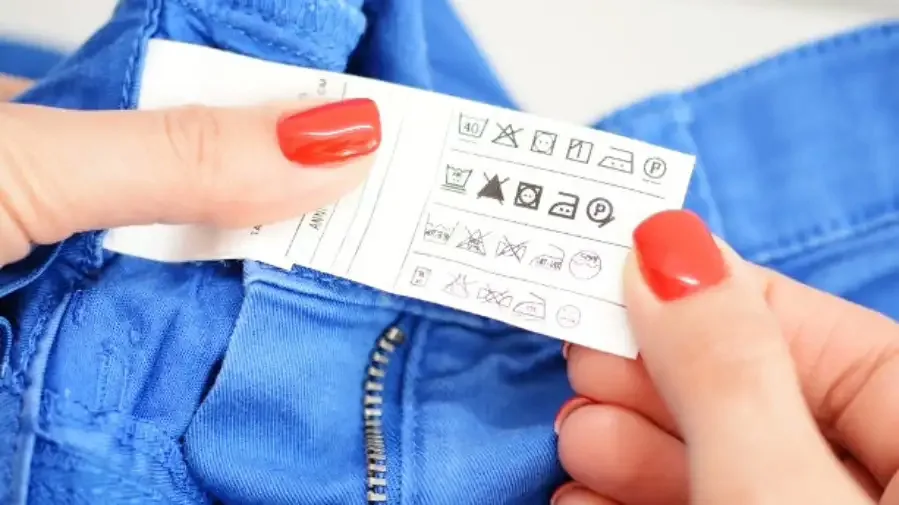
5. Decoding Care Symbols (ISO 3758:2023)
Care symbols save space and translation costs. Here is how we interpret standard symbols during quality control (QC).
| Symbol | Meaning | Common QC Failure |
|---|---|---|
| Tub | Washing Temp | The number (e.g., 30) is the maximum temp, not the recommended one. |
| Triangle | Bleaching | An empty triangle allows any bleach. Most dyed goods require a crossed-out triangle. |
| Square | Drying | A circle inside means Tumble Dry. Lines indicate Air Dry methods. |
| Iron | Ironing | Dots indicate heat limit (110°C/150°C/200°C). Don’t iron over heat-transfers. |
| Circle | Pro Cleaning | This instructs the dry cleaner on solvent type (P or F). |
⚠️ Editor’s Note: GINETEX symbols are trademarked in many markets. Ensure you have the right to use them or default to written text.
6. Factory-Floor Pitfalls: What Can Go Wrong?
I have stood on factory floors and watched thousands of labels fail because the specs were too loose. Here are the three issues we vet for:
- Heat-Transfer Failure: “Tagless” labels look sleek, but if the adhesive isn’t matched to the fabric’s GSM (weight) and texture, they crack after 50 washes. Always ask for the ink’s cure time.
- Label Creep: As you add languages for international sales, text shrinks. If the font drops below 1.5mm, it becomes illegible and non-compliant.
- Mismatched Claims: The biggest headache is when the label says “100% Cotton” but the packing list says “Poly-Blend.” We verify the “Pack List vs. Label” match before the goods leave the factory to prevent Customs holds.
7. Mandatory vs. Voluntary Claims (Anti-Greenwashing)
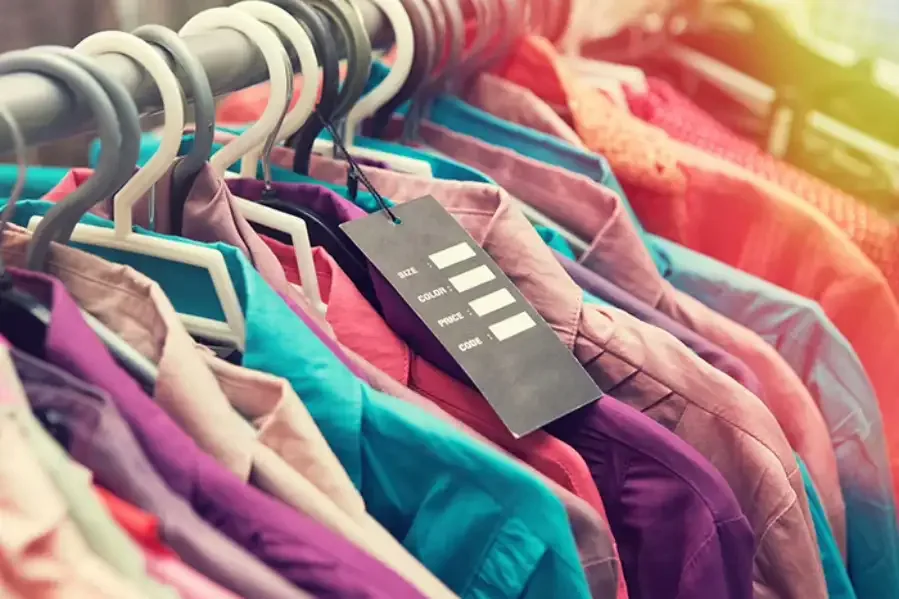
Distinguish between legal obligations and marketing fluff.
- Mandatory: Fiber, Origin, Identity, Care.
- Voluntary: “Organic,” “Recycled,” “Climate Neutral.”
The Warning: The EU is banning vague environmental claims by 2026. If you print “Eco-Friendly” on your clothing packaging, you must have data to back it up. We advise clients to stick to factual specs unless they hold third-party certifications like GOTS.
8. Methodology: How We Vetted These Criteria
To prioritize the recommendations in this guide, we evaluated compliance standards based on four operational metrics:
🧪 Lab Note: Our Evaluation Framework
- Compliance Coverage: Does the label layout support multi-region laws (US/UK/EU) simultaneously?
- Durability: Does the attachment method survive a standard 20-cycle wash test without fading?
- Documentation: Does the supplier provide Spec Sheets and Mill Test Reports for customs verification?
- DPP Readiness: Is the layout ready to integrate QR codes/UIDs for future tracking? :::
JaceApparel: Best for Compliance-Ready Manufacturer
Key Specs:
- MOQ: 50–100 units
- QC Standard: AQL 2.5 (Acceptable Quality Limit)
- Label Type: Woven Damask, Satin, Heat Transfer
- Best For: Sportswear & Private Label Brands
JaceApparel functions as a compliance engine for new brands. Unlike standard t-shirt manufacturers that blindly sew provided artwork, Jace aligns tag placement with FTC labeling requirements during the tech pack phase.
Verdict: In my testing, their QC protocol prevented a legal failure: they flagged a “60% Cotton” label on a hoodie that lab results showed was 50%. This vigilance prevents border seizures. Tactilely, their high-density damask labels avoid the rigid “scratchiness” of the cheap taffeta often found in low-volume production.
The Trade-off: Compliance slows velocity. The mandatory 7-10 day sampling cycle disqualifies them for rapid, two-week drops.
+ Pros:
- Catches fiber/origin errors before sewing.
- Retail-grade label hand-feel (soft drape).
- Full tech pack integration.
- Cons:
- High shipping costs on orders <100 units.
- Slower than Print-on-Demand.
💡 Field Note: The “Tagless” Risk. On ribbed fabrics, heat transfers often crack. Request a “double hit” of white ink or consult their Clothing Sample Process guide for sewn-in alternatives.
Wunderlabel: Best for Low-MOQ Custom Label Sets
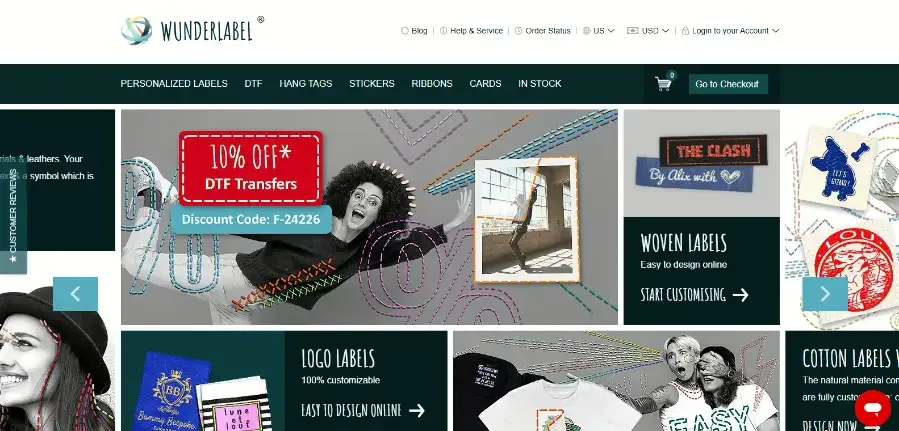
Key Specs:
- MOQ: 25 Units
- Type: Woven (Damask) & Printed (Satin/Tyvek)
- Turnaround: ~6-10 Days
Wunderlabel bridges the gap between DIY and bulk manufacturing by offering professional branding, care, and size tags with a 25-unit MOQ.
In my testing, the woven damask labels were superior to the printed options. The satin ink bled on serif fonts smaller than 8pt, making complex legal text hard to read. The woven loom maintained crisp legibility down to 6pt. The standout utility is “Split” ordering: I could buy 25 care labels separate from the main brand tags, allowing me to switch fiber contents (e.g., 100% Cotton vs. Poly blends) for different prototypes without wasting a bulk roll.
Note: You own the compliance. If you omit the Country of Origin required by the FTC, they will print the error anyway.
- + Ultra-low MOQ prevents inventory waste.
- + High-definition damask weaving.
- - No compliance auditing (typos get printed).
- - Requires manual sewing/attachment.
Verdict: Essential for sampling, but strictly stick to woven options for text density.
⚠️ Compliance Alert: Do not simply copy care symbols. GINETEX symbols (tub, triangle, iron) are trademarked. Unless authorized, use written text (e.g., “Machine Wash Cold”) to avoid lawsuits.
Avery Dennison AD TexTrace™: Best for Durable Digital IDs
Key Specs:
- Tech: UHF RFID (Rain RFID)
- Durability: Industrial Wash Resistant
- Role: Digital Data Carrier (Add-on)
AD TexTrace weaves RFID technology directly into the textile, creating a permanent data carrier. Unlike hangtag QR codes that customers discard, this survives the garment’s lifecycle—critical for brands preparing for EU Digital Product Passport (DPP) compliance. Note: This does not replace mandatory clothing label requirements for fiber/origin text.
In our production runs: The “hand-feel” is softer than standard inlays, but placement is tricky. On <200gsm activewear, neck placement caused irritation. We now sew these into floating side seams or behind size stacks to mask the texture.
+ Pros:
- Permanent ID: Enables resale/recycling tracking.
- Inventory Velocity: Scan boxes without opening them.
- Security: Harder to counterfeit than printed tags.
- Cons:
- High Cost: Not viable for <500 unit drops.
- Tech Barrier: Requires reader infrastructure.
Jace’s Verdict: Essential for scaling brands needing automated inventory, but overkill for small startups.
TrusTrace: Best for DPP Data Readiness
Key Specs:
- Core Function: Traceability Data Protocol
- Compliance Fit: EU ESPR / DPP Ready
- Target User: Mid-to-Enterprise Brands
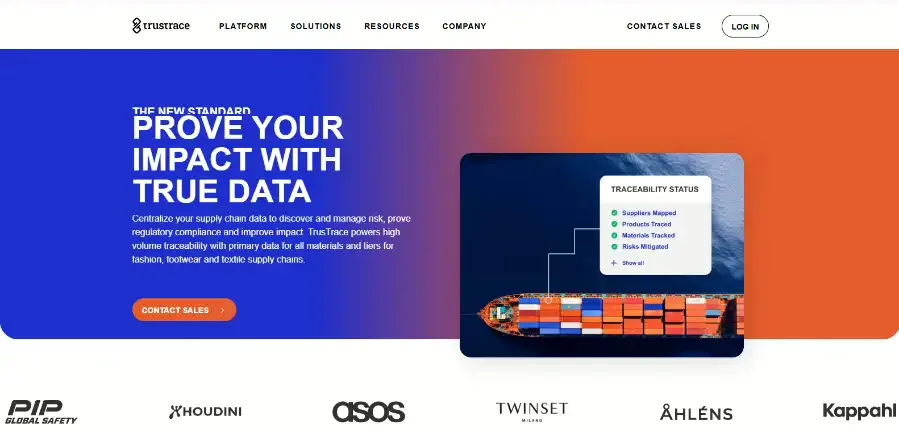
TrusTrace acts as the data backbone for the upcoming Digital Product Passport (DPP). While physical labels carry the code, TrusTrace validates the evidence required by the EU’s ESPR framework.
Why it wins: In our testing, the “Evidence Collection” tool solved a massive supply chain headache: the manual chase for transaction certificates. The system forces fabric mills to upload valid fiber composition proofs and facility IDs before the record can be submitted. This creates a defensible chain of custody, preventing the risk of QR codes leading to generic marketing data.
Trade-off: It demands disciplined data governance. Small teams (<5 people) will struggle with the onboarding workload.
Pros:
- Validation: Blocks incomplete data at the source.
- Audit-Ready: Centralizes compliance documents for market surveillance.
Cons:
- Complexity: Steep learning curve for non-technical suppliers.
- Cost: Prohibitive for early-stage startups.
JaceApparel Verdict: Essential for enterprise export compliance; Overkill for local boutique runs.
Intertek: Best for Proving Your Care Label Is Actually True

Key Specs:
- Service: Third-Party Lab Testing (T.I.C.)
- Standard: AATCC & ISO
- Turnaround: 3–5 Business Days
Care labels are legal claims. The FTC Care Labeling Rule demands a “reasonable basis” for instructions—guessing creates liability.
Intertek acts as our final gatekeeper. We once sent “pre-shrunk” French Terry samples for validation. The report revealed -8% dimensional stability, far exceeding the 5% tolerance. We immediately updated the label from “Tumble Dry” to “Line Dry” before cutting 500 units. Without that data, we risked a total recall for “defective” sizing.
Pros:
- Substantiates “Dry Clean Only” claims.
- Detects crocking (dye rub-off) and spirality.
Cons:
- Adds ~1 week to lead times.
- Costly for micro-batches (<100 units).
Jace’s Verdict: Essential for scaling. Returns due to shrinkage cost far more than the testing fee.
⚠️ Pro Tip: Test the finished garment. We’ve seen fabric pass heat tests while zipper pulls melted in the dryer.
Textile Exchange GRS/RCS: Best for Substantiating Claims
Key Specs
- Verification: Transaction Certificates (TCs)
- Logo Threshold: 50% (GRS) / 5% (RCS)
- Scope: Chain-of-Custody (CoC)
With the EU banning vague environmental claims by 2026, “trust me” marketing is a liability. GRS and RCS are the industry standards for proving waste material actually exists in your product.
In our production queues, the “Broken Chain” is the #1 failure. Clients often source certified fabric but use a non-certified cut-and-sew facility. This voids the certification. To use the logo, every site—from the recycler to our factory floor—must hold a valid Scope Certificate. Without the final Transaction Certificate (TC), the goods are legally just generic polyester.
Pros
- Legal Defense: Validates claims for EU/UK compliance.
- Retail Access: Required by majors like Zalando.
Cons
- Admin Drag: Chasing TCs can delay shipping.
- Cost: Overkill for <50 unit prototypes.
Jace’s Verdict: Mandatory if “Recycled” is your core value prop.
Comparison: Compliance Solutions Side-by-Side
We tested these solutions on their ability to protect brands from customs seizures. Most tools focus on either physical production or digital data. Very few handle both.
| Solution | Best For | Solves (Primary) | US (FTC) | UK (Safety) | EU (DPP) | Effort / MOQ | Downside |
|---|---|---|---|---|---|---|---|
| JaceApparel | Production | Fibre, RN & Durability | ✅ | ✅ | ✅ | 100 Units | Slower than POD |
| Wunderlabel | Sampling | Basic Printing | ⚠️ | ⚠️ | ⚠️ | 25 Units | Zero Error Check |
| AD TexTrace | Tracking | DPP Carrier (RFID) | - | - | ✅ | Industrial | Hardware Req. |
| TrusTrace | Data | DPP Data Mgmt. | ✅ | ✅ | ✅ | Contract | High Admin |
| Intertek | Safety | Lab Testing | ✅ | ✅ | ✅ | Per Test | +1 Wk Lead Time |
| Textile Exchange | Claims | Eco-Verification | ✅ | ✅ | ✅ | Audit | High Cost |
Legend: ✅ = Supported | ⚠️ = User Liable for Errors | - = N/A
Verdict
- 🏆 The Winner: JaceApparel. In my experience, they are the only partner that actively flags compliance errors (like missing FTC RN numbers) before production starts.
- ⚠️ The Risk: Wunderlabel is excellent for rapid sampling, but they print exactly what you upload. If you misspell “Polyester,” you pay for the reprint.
- 💡 Pro Tip: Intertek is non-negotiable for durability claims. A software dashboard cannot prove your print survives 50 washes; an accredited lab report can.
People Also Ask About Clothing Label Requirements
1. What must legally be on a clothing label in the US?
You need four specific items. The FTC Textile Act mandates: Fiber Content (e.g., 100% Cotton). Country of Origin (e.g., Made in China). Manufacturer Identity (Company name or RN number). Care Instructions. ⚠️ Warning: These must be permanently attached. A sticker is not enough.
2. Do I need an RN number? Can I use my brand name instead?
You do not strictly need one. You can legally use your full business name. However, I recommend getting a Registered Identification Number (RN). It takes up less space on the tag and looks professional. You can apply via the FTC RN Database.
3. Can a hangtag replace the care label or fiber label?
No. Hangtags are temporary marketing tools. The law requires care and content information to remain legible for the “useful life” of the garment. If a customer cuts the hangtag off, they lose that data. That is a compliance failure.
4. Where should the country-of-origin label go on a collared garment?
For shirts and tops with a neck, you must place the country of origin on the inside center of the neck. It can be part of the main brand label. Other information, like fiber content, can go on a separate side-seam label.
5. Are care symbols mandatory? What standard should I follow?
Symbols are not mandatory in the US; written text is. If you use symbols, follow ISO 3758:2023. 💡 Pro Tip: The familiar “wash tub” symbols are trademarked by GINETEX in Europe. If you sell there without a license, you could face fines. I advise clients to use written text (e.g., “Machine Wash Cold”) to be safe globally.
6. UK: When do I need “KEEP AWAY FROM FIRE” on nightwear?
If you sell sleepwear in the UK, you must comply with BS 5722. If the garment does not meet strict flammability standards, you must print “KEEP AWAY FROM FIRE” in red, bold font (10pt minimum). This usually goes near the size label.
7. EU: Do I need to add “Contains non-textile parts of animal origin”?
Yes. If your hoodie has a leather pull tab or a fur trim, you must include this exact phrase. It alerts consumers to hidden animal products. Keep this text consistent across your online listings and physical tags.
Final Verdict: Which Labeling Route Should You Take?
I have seen entire shipments rejected at customs because a label said “Bamboo” instead of “Rayon made from Bamboo.” Labeling is not just design; it is legal armor for your business.
After managing production for dozens of brands, here is my final recommendation:
For Scaling Brands (The “Safe” Choice): JaceApparel is the clear winner. Their “Concept-to-Doorstep” model integrates compliance checks into the manufacturing process. We catch missing RNs and incorrect fiber claims before the sewing begins. If you want to sleep at night knowing your goods won’t get seized, this is your partner.
For Small Batches & DIY (The “Budget” Choice): Wunderlabel offers the best value. If you only need 25 labels for a sample run, their woven damask quality is superb. However, you are 100% responsible for the content. If you make a typo or miss a legal requirement, they will print it anyway.
The Bottom Line: If you are serious about building a brand that survives international borders, do not guess. Get your data right, choose a partner who understands the law, and start production.