
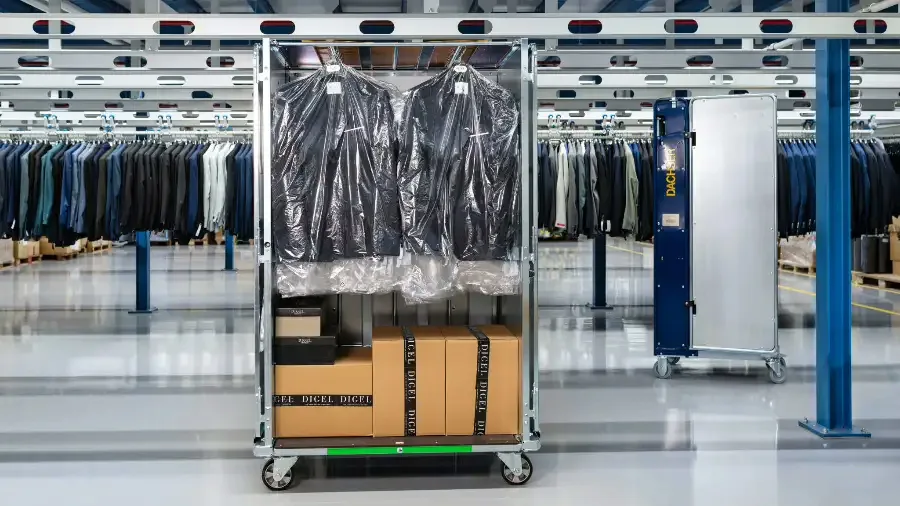
Clothing logistics is the operating system connecting inbound freight, fulfillment, and returns—it is not just shipping. In my experience, viable 2026 operations require three non-negotiables: 99%+ inventory accuracy via RFID, cross-docking to clear seasonal drops in under 24 hours, and EU Digital Product Passport traceability. I advise brands to avoid generic 3PLs; you need partners engineered specifically for high-SKU apparel complexity.
Key Takeaways
- Map the flow: Track units from the sewing floor to final resale. We find that ignoring the “returns loop” is the most common error in scaling logistics.
- Design for drops: Cross-docking and pre-allocating by size curve prevents the bottlenecks typical of 24-hour launch windows.
- Calculate true margin: Factory price is a vanity metric. Real margin includes HTS duty, China-origin surcharges, and DC labor.
- RFID is the baseline: By 2026, AI demand sensing and RFID are mandatory to prevent overselling on high-velocity SKUs.
- GOH vs. Flat-pack: This is purely economic. You must calculate if freight density savings outweigh the cost of domestic steaming and finishing labor.
- Resell returns: Strict grading standards turn reverse logistics into a revenue lever rather than a total loss.
- Compliance is mandatory: Digital Product Passports (DPP) are moving from optional to required for market access.
- Next Step: Run a 50-unit pilot to validate fee schedules and tech integrations.
The Operational Playbook: From Factory Floor to Front Porch
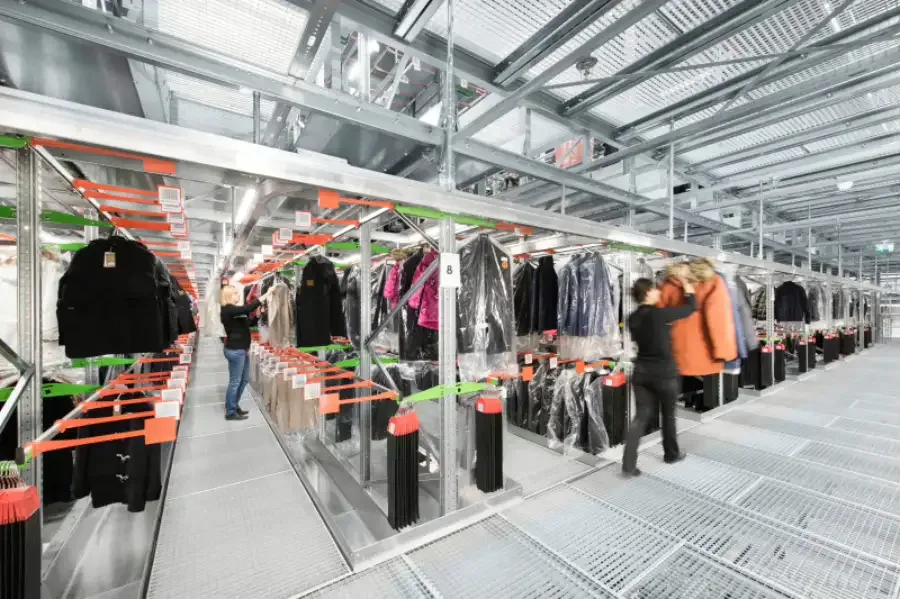
We define successful clothing logistics not by how fast a truck moves, but by how much data travels with the garment. In our work with scaling brands, we find that 90% of fulfillment disasters originate weeks before the product reaches a warehouse. The chaos starts at the factory packout.
To fix this, you must treat your logistics chain as a single, synchronized operating system. This section breaks down the specific nodes where fashion supply chains break and the exact protocols we use to prevent it.
1. Sewing Floor ‘Finished Goods’ → Factory Packout
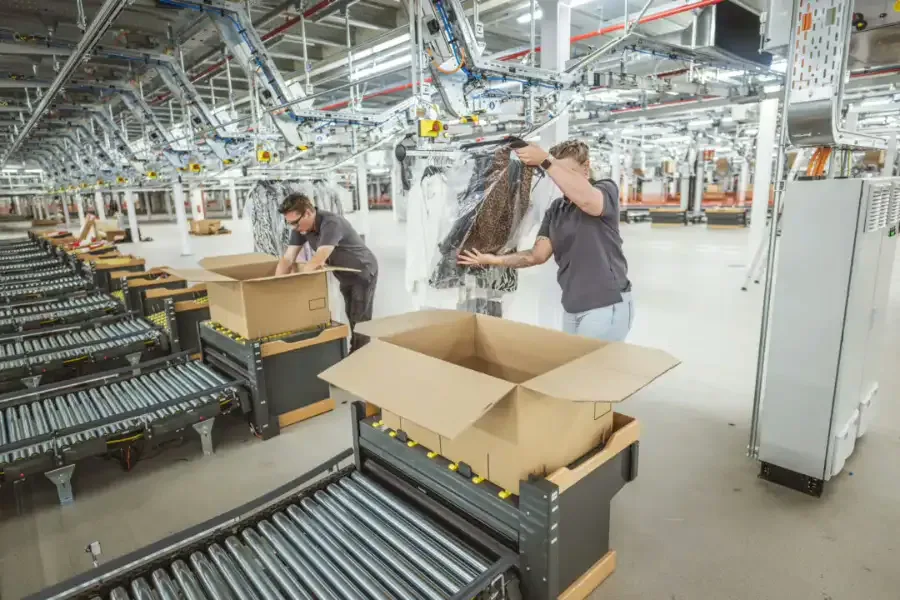
Logistics quality starts at the finishing table, not the shipping dock. If a factory packs a Medium shirt into a Large polybag, no amount of downstream software will fix the error. It simply becomes a costly return three weeks later.
We enforce strict packout standards to eliminate these “ghost errors.” The factory must generate an Advance Shipping Notice (ASN) before the goods leave the floor. This digital file tells the receiving warehouse exactly what is coming (SKU, quantity, carton count) before the container arrives.
The Packout Protocol:
- Size Runs: We require manufacturers to pack cartons by size (e.g., Solid Size S) or pre-defined ratios (e.g., 1-2-2-1) rather than loose mixing.
- Carton Marking: Every box must have a side-mark detailing the Purchase Order (PO), SKU, and weight.
- Barcode Discipline: Every unit needs a scan-able barcode (UPC or FNSKU) applied on the outside of the polybag.
🧠 Supervisor Note: Do not let your factory “guess” the packaging. We define this during the Clothing Sample Process. If the sample packaging is wrong, the bulk packaging will be wrong.
For deep dives on setting these standards early, review our guides on How to Manufacture Clothing and Clothing Label Requirements.
2. Export + International Linehaul (Risk Controls)

Once goods leave the factory, you face the Air vs. Sea decision. Air freight is fast (5-7 days) but expensive; Sea freight is cheap but slow (30-45 days).
The Competitor Gap: Moisture Control Most brands ignore “Container Rain.” When shipping via sea, temperature fluctuations cause condensation inside the container. We have seen entire shipments of cotton hoodies arrive covered in mold because the brand skipped desiccants.
Our SOP for Ocean Freight:
- Ventilation: Use containers with taped vents to prevent moist sea air intake.
- Desiccants: Hang 1kg calcium chloride poles every 3 meters inside the container.
- Documentation: You must photograph the empty container (to prove it was clean) and the loaded container (to prove it was dry) for insurance claims.
For context on lead times from different regions, compare our data on US vs China Manufacturing with nearshore options like Clothing Manufacturer in Spain or Clothing Manufacturers in Georgia.
3. Port → Inbound Receiving (The Accuracy Choke Point)
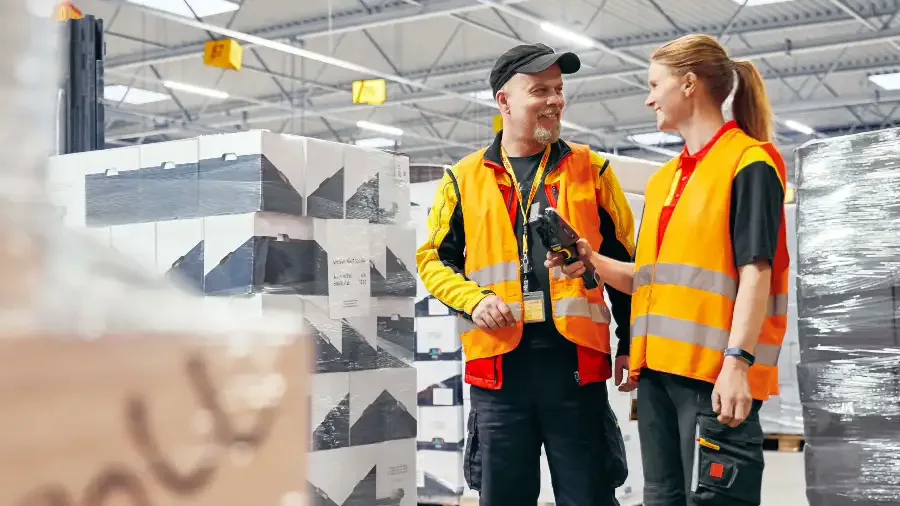
The “Receiving” dock is where inventory accuracy goes to die. If a 3PL receives 500 units but logs 490, you have lost revenue and created a customer service nightmare.
Best Practices for Receiving:
- Appointment Scheduling: Trucks must book a slot. Unscheduled deliveries sit in the yard, accruing fees.
- Scan Compliance: Workers must scan every carton or pallet license plate. Manual counting is forbidden for high-SKU fashion brands.
- Discrepancy Handling: If the physical count does not match the ASN, the goods go into a “Trouble Pile” immediately for audit.
Executive KPI Targets:
- Dock-to-Stock Time: <48 hours (Standard) or <24 hours (Priority).
- Cycle Count Cadence: Weekly random counts of high-velocity SKUs rather than annual shutdowns.
4. Warehousing Models: Storage vs. Cross-Docking
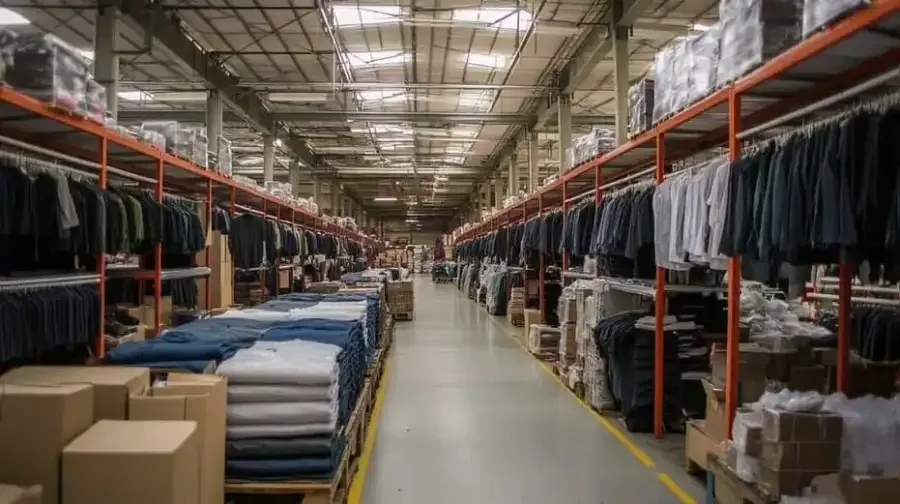
In apparel, holding inventory costs money. Moving it costs less.
Traditional Storage: You pay for a “pick face” (a bin) for every SKU. This works for evergreen items like black t-shirts.
Cross-Docking (The Supervisor Requirement): For seasonal drops or “viral” launches, we use cross-docking. We receive the goods at the inbound dock and move them directly to the outbound shipping lane, skipping the storage racks entirely.
Conditions for Success:
- Pre-Ticketed SKUs: The factory must apply the final shipping label or retailer tag.
- Pre-Allocation: We must know exactly which customer gets which box before the truck arrives.
- Clean Data: If the ASN has errors, cross-docking fails.
5. Garment-on-Hanger (GOH) vs. Flat-Pack
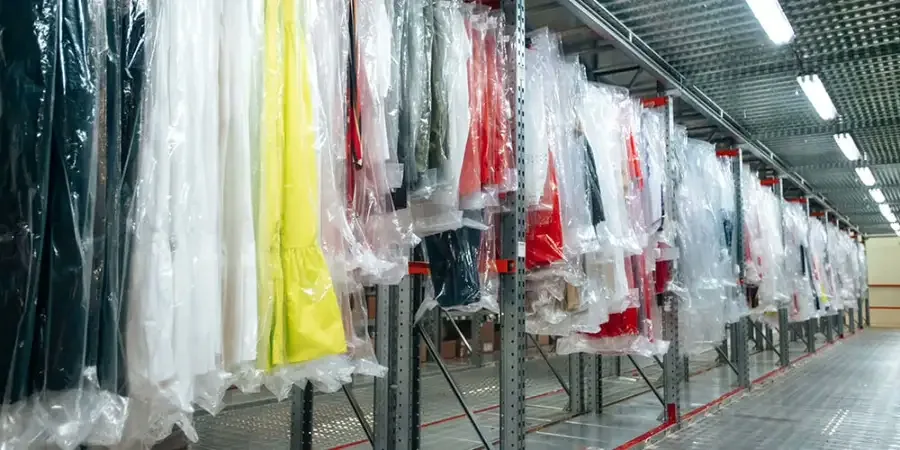
Should you ship suits on hangers or folded in boxes? This is a math problem, not a preference.
The Cost Framework:
- Freight Density: Flat-packing fits 30-50% more units in a container. GOH ships a lot of “air.”
- Labor Offset: Flat-packed goods require steaming and re-hanging at the destination. GOH goes straight to the retail floor.
- Damage Risk: Delicate fabrics (silk, linen) crease permanently in flat-packs.
🔬 The Science: Check your fabric weight. Heavy fabrics like those described in GSM Fabric resist creasing better than lightweight synthetics.
The Verdict: If the cost of domestic labor (steaming) exceeds the freight savings, use GOH. If you are shipping robust items like T-shirt Fabric Types, flat-pack is superior.
6. Omnichannel Fulfillment

A modern inventory must serve three masters: Direct-to-Consumer (DTC), Wholesale, and Marketplaces.
- DTC: Requires “unboxing experiences.” The warehouse must handle tissue paper, stickers, and complex split-shipments.
- Wholesale (B2B): Retailers require EDI (Electronic Data Interchange) compliance. If you send a box with the wrong label size to a major retailer, they will charge you a “chargeback” fee.
- Marketplaces (Amazon FBA): Amazon has strict prep rules. Your 3PL must know how to apply FNSKU labels and book delivery appointments via Carrier Central.
We maintain “One Inventory Truth”—a single pool of stock that feeds all channels, preventing overselling.
7. Real-Time Tracking: WMS + RFID + AI (2026 Baseline)
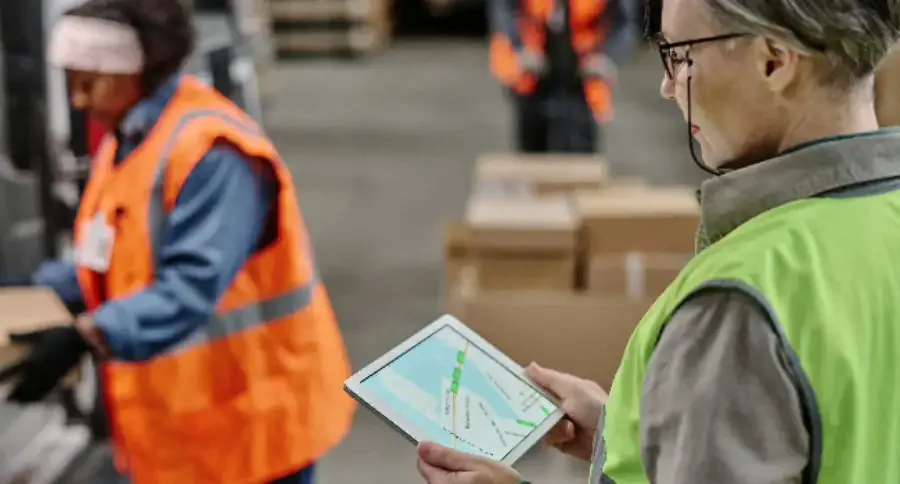
By 2026, barcode scanning will be too slow. We are moving toward RFID (Radio Frequency Identification).
The Technology Stack:
- RFID: We tag items at the source. A warehouse worker can scan 500 units in a box in seconds by waving a wand, reaching 99% inventory accuracy.
- AI Demand Sensing: Instead of guessing, we use AI to blend sell-through rates, web traffic, and returns data to predict stockouts before they happen.
- Integration: Your Warehouse Management System (WMS) must talk to your ERP and Shopify store via middleware (iPaaS).
8. Reverse Logistics (Returns as a Margin System)
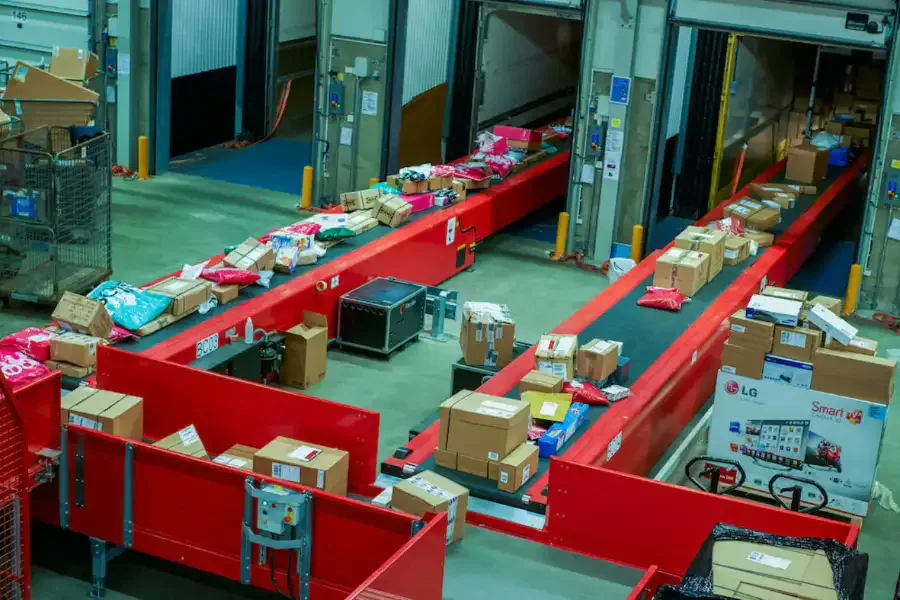
Returns are the silent killer of fashion margins. We treat returns as a “mining operation” to recover value.
The “Returns Engine” SOP:
- Intake & Triage: Customer initiates RMA. System auto-approves based on rules.
- Grading (A/B/C):
- Grade A: Perfect condition. Re-fold, re-bag, restock immediately.
- Grade B: Minor wrinkle/scent. Steam and refurbish.
- Grade C: Damaged. Recycle or donate.
- Hidden Fee Warning: Contract clearly for “refurbishment fees.” Many 3PLs charge excessive amounts to re-fold a shirt.
9. Sustainability: Traceability and the EU DPP
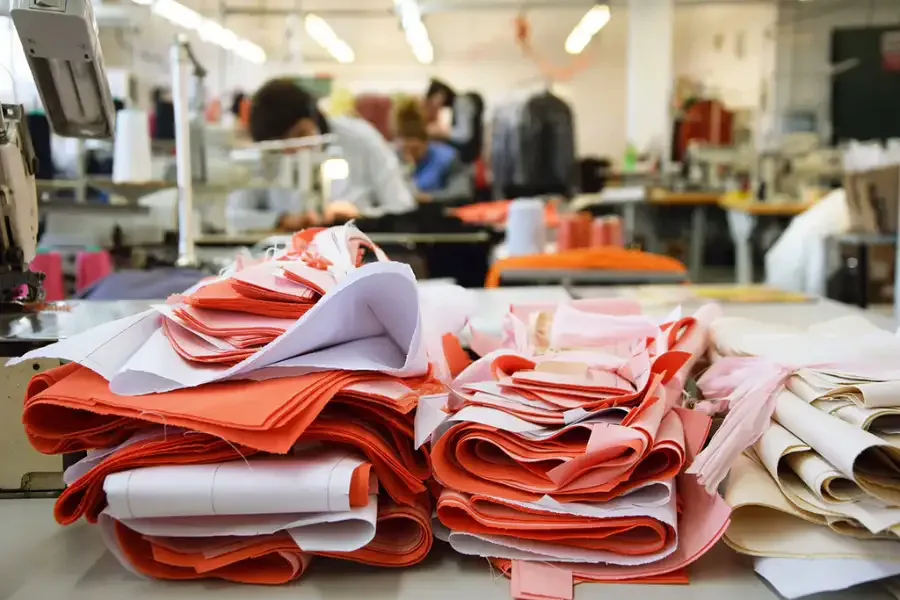
The EU Digital Product Passport (DPP) transforms compliance from a “nice-to-have” to a “license to trade.”
The Requirement: You must provide data on material composition, recyclability, and supply chain custody. This data must be linked to the physical garment via a QR code or RFID tag.
Operational Impact: Your logistics partner must capture “events” (Inbound, Move, Pick, Ship) digitally. If you cannot prove where the cotton came from, customs can seize the shipment.
10. The 3PL Scorecard
When vetting a logistics partner, use this weighted checklist. If they hesitate on any point, walk away.
- Apparel Specialization: Do they have steamers? Do they know how to handle GOH?
- Systems Maturity: Do they use a modern WMS? Are they API-ready?
- Drop Readiness: Can they scale labor up 500% for a Black Friday drop?
- Returns Competence: Do they have a dedicated grading team?
- Pricing Transparency: Are pick-and-pack fees clear, or hidden in “storage” costs?
If you want a drop-ready logistics plan that handles these complexities for you, let’s audit your supply chain.
Exceptions & Scenarios: When Standard Logistics Rules Fail
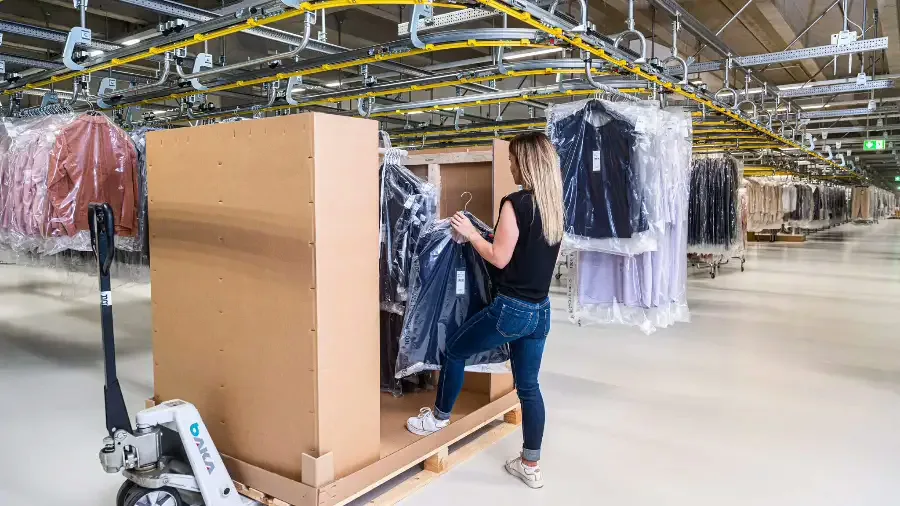
Standard supply chain advice assumes you are shipping standard freight. But apparel is different. It is seasonal, fits into erratic box sizes, and suffers from “variant chaos.”
After managing logistics for high-growth brands ranging from startup “drops” to mass-market retail, I have identified seven specific scenarios where standard rules break. If you fall into these categories, you must adjust your operational logic immediately.
Scenario A: For ‘Hype Drop’ Models (Cross-Docking)
If you sell inventory via 24-hour “hype drops,” standard warehousing fails. Traditional receiving takes 48 hours. By then, your launch window is closed.
The Adjustment: Cross-Docking We bypass the storage racks entirely. We move goods from the inbound dock directly to the outbound lane.
- Pre-Allocation: You must provide size curves (e.g., 100 Small, 200 Medium) before the truck arrives.
- Pre-Kitting: Factory workers must insert marketing cards inside the polybag. If the warehouse team has to open bags, you lose speed.
- The Risk: If your Advance Shipping Notice (ASN) is wrong, the entire drop stalls.
⚠️ Warning: In our facility, a mismatched ASN forces a manual recount. This costs $45/hour per packer and often delays the drop by 72 hours. We require 100% data accuracy from the factory for this model.
Scenario B: GOH (Hanging) vs. Flat-Pack
New founders often ask which shipping method is “better.” It is not a preference; it is math.
The Decision Protocol
- Suits & Outerwear: Use Garment-on-Hanger (GOH). The cost of shipping “air” inside the container is lower than the US labor cost to steam out deep creases.
- Hoodies & Tees: Always Flat-Pack. You can fit 30% more units in the container. The fabric weight naturally pulls wrinkles out, and steaming is rarely necessary.
🛡️ Our Verdict: We recently switched a streetwear client from GOH to flat-pack for their heavyweight cotton collection. This single change saved them $1.40 per unit in freight costs without impacting product quality.
Scenario C: DTC-Only vs. Omnichannel Scaling
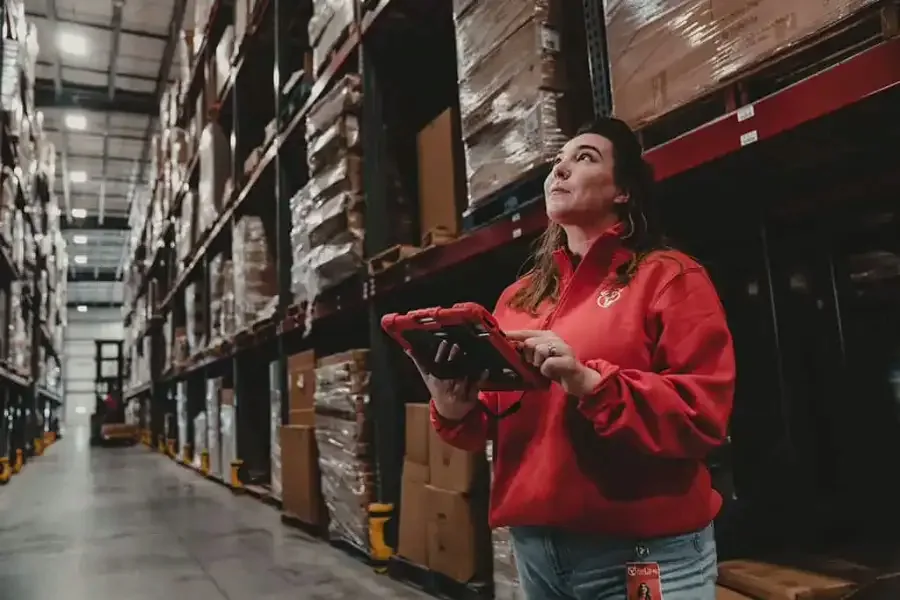
A startup selling on Shopify has fundamentally different logistics needs than a brand selling to Nordstrom.
DTC-Only Brands: Speed is the Metric We optimize the packout line for the Unboxing Experience.
- Focus: Tissue paper alignment, sticker placement, and handwritten notes.
- Goal: Viral social sharing.
Omnichannel (DTC + Wholesale): Compliance is the Metric Aesthetics take a backseat to the Routing Guide. Major retailers fine you for mistakes.
- The Shift: We implement strict compliance checks.
- The Requirement: Labels must sit exactly where the retailer specifies.
- The Consequence: A barcode misplaced by one inch can trigger a chargeback of 5% of the invoice value.
Scenario D: Selling into the EU (DPP Readiness)
If you plan to sell in Europe, the rules change in 2026. The Digital Product Passport (DPP) will require full transparency.
The Adjustment: Data as a Material You cannot just track the shirt; you must track its history.
- Upstream: You must collect origin certificates for every fabric roll before production starts.
- Downstream: Your 3PL must record “custody events” (who touched the box and when).
- Pitfall: “Spreadsheet traceability” will not work. You need systems that link this data to a unique QR code on the garment.
Scenario E: The ‘Landed Cost’ Shock
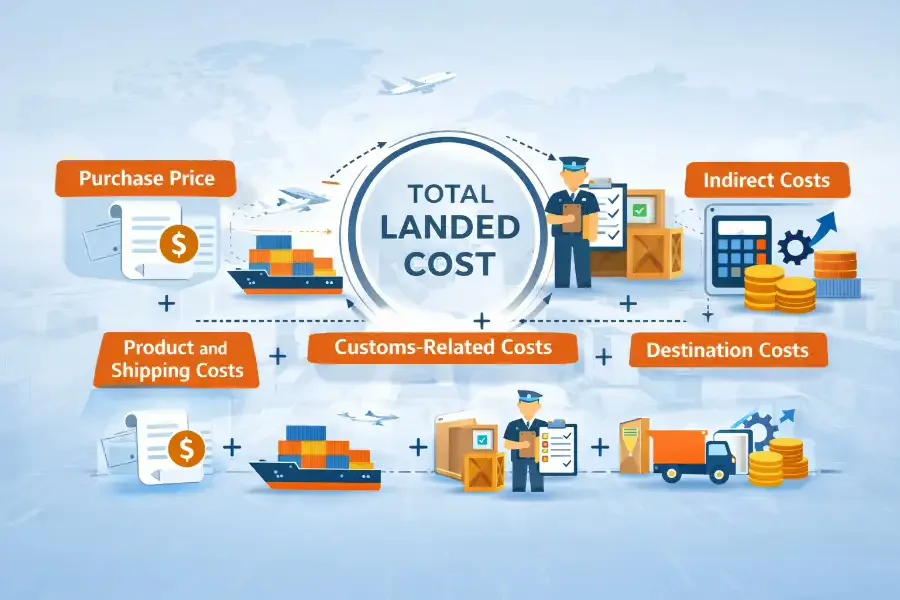
New brands often calculate margin based on factory price alone. This leads to cash flow failure.
The Fix: The Total Landed Cost Model I advise clients to add a “Margin of Error” buffer for duties.
- Verify HTS Codes: A “synthetic blend” shirt might trigger a 32% duty rate, while a “cotton” shirt triggers 16%. A single misclassification wipes out your net profit.
- DC Labor: Factor in the cost to receive, sort, and store the goods. It is never free.
⚖️ Regulation: Never guess your duties. Verify your classification in the Official HTS Database or hire a customs broker. I have seen brands hit with $15,000 surprise bills due to “best guess” coding.
Scenario F: Ocean Freight Moisture (Container Rain)
This is rare, but it destroys businesses. Temperature changes at sea cause condensation to “rain” down inside the container.
The Prevention Checklist
- Desiccants: Mandate high-absorption calcium chloride poles in every container.
- Humidity Cards: Use indicators that change color if moisture spikes. This proves when the damage occurred for insurance claims.
- The 12% Rule: If moisture content in the fabric exceeds 12% at the factory, do not load it. It will mold.
Scenario G: High-SKU Variant Confusion
In a dim warehouse, “Navy Blue,” “Midnight,” and “Black” look identical. This causes mis-picks and expensive returns.
The SOP Adjustment
- Scan-Enforced Picking: Pickers cannot rely on their eyes. They must scan the barcode. If the scanner beeps red, the system locks the order until the correct item is scanned.
- Naming Conventions: distinct naming (e.g., “NAVY-01” vs “BLK-01”) prevents visual confusion on the pick sheet.
- Bin Separation: We never store look-alike SKUs in adjacent bins. We physically separate them by at least two aisles to prevent “bin drift.”
People Also Ask About Clothing Logistics
1. What’s the difference between clothing logistics and apparel supply chain management?
Logistics is the muscle; SCM is the brain. Logistics covers physical execution—moving, storing, and shipping goods. Supply Chain Management (SCM) is the overarching strategy, covering sourcing, production planning, and vendor selection. You can outsource logistics, but in my experience, you must own the SCM strategy to protect your margins.
2. What should I look for in fashion 3PL services (beyond price)?
Prioritize apparel specialization and tech integration. A generalist 3PL will ruin your garments. We look for specific capabilities: distinct GOH (Garment-on-Hanger) racking, RFID scanning discipline, and a rigorous returns grading team. If they cannot demo their Shopify integration live during our site visit, we walk away.
3. What KPIs matter most for garment warehousing and distribution?
Inventory Accuracy and Return Processing Speed. For fashion, mis-picks create permanent customer churn. I strictly track “Dock-to-Stock” time (goal: <24 hours) and “Return-to-Resale” velocity. If returns sit for weeks, you miss the seasonal window to resell them at full price.
4. How do I prevent hidden 3PL fees in reverse logistics for clothing?
Contractually define “Touch Fees.” 3PLs often bury costs in vague “receiving” line items. We explicitly cap fees for re-bagging, steaming, and tag removal in the initial contract. Demand a pilot invoice review; I have seen “misc labor” charges eat 15% of margin on unnegotiated contracts.
5. Is RFID worth it for real-time inventory tracking in 2026?
Yes, specifically for high-variant brands. If you manage >500 SKUs (sizes/colors), manual barcode scanning is too slow. We found that RFID reduces cycle count times by 90% and virtually eliminates “phantom inventory.” The ROI becomes positive once your shrinkage cost exceeds the tag hardware cost.
6. How do I get help designing a resilient clothing logistics setup?
Start with a supply chain audit. Do not guess at your infrastructure. Contact our team. When you reach out, have your SKU count, target markets, and estimated returns rate ready. We will help you build a “0 to 1” logistics map that scales.